Human and Synthetic Voice · Audio Description
You're Deciding Between a Human Voice and a Synthetic One.
That call is getting made right now at studios, streamers, and brand teams. Usually on cost. Usually with nobody checking what it does to the audience on the other end.
I work with the people making that decision. Thousands of Audio Description credits for Netflix, Disney+, HBO, Hulu, and FX are what I bring to it.
Have one file you're unsure about? Start with the $250 Trust the Signal Scan. A written read in two business days.
Why This Matters
When the voices don't match, audiences feel it before they can name it.
The first time I watched a film with a friend who is blind, I waited for the Audio Description to carry what the filmmaker intended, like the tension before a door opened.
The words meant something. You could tell.
Other times, the voice delivered the scene and missed the story. My friend got stage directions instead of the movie.
I've spent twenty years closing the distance between what a story intends and what reaches the audience.
The same failure shows up in brand content and in AI-generated voice. Same pattern every time.
The Problem
"Something Feels Off."
A synthetic voice can read the words. It doesn't know what the content was trying to do with them.
I watched a horror movie where the Audio Description said, "A woman walks in." That was all of it. No tone, no tension. Sighted viewers felt the dread build before the door opened. Blind viewers got stage directions. Same words, different movie. I won't name the title, because I could name a dozen more.
I've sat next to that. The room pulls in a breath and one person in it doesn't, because nobody has told him why yet.
The same pattern runs through the rest of your content. The AI voice clears technical review and sounds wrong to real listeners. The accessibility deliverable meets the requirement and misses the story. Teams decide fast, with no reliable way to check whether the choice landed.
The bill arrives after release. Audiences stop watching. Reviewers name the failure in public, by title, on a page that stays up.
Where it goes wrong
About 7 million Americans have vision loss that glasses can't correct. Organized, vocal audience. When Audio Description misses, word travels, and some stop watching.
AI voice rollouts that read fine on paper and feel wrong to listeners.
Accessibility that clears compliance and misses the story.
Voice decisions made with no way to check the result until a reviewer checks it for you.
Vision loss figure: CDC Vision Loss Facts
The Evidence
Hear the difference: the same scene described both ways.
One hundred seconds. One scene, described twice, once by a synthetic voice and once by a human performer. Each read opens with the Kevin's Way Tone Opens in a new tab., a short sound that tells you which one you're about to hear.
Read the Audio Description text from this clip
"Come back to me. Ed, don't die. Please don't die. I'm here now." The rope unravels.
In a flashback, Stede and Ed toast. Stede checks Ed's beard. They share a laugh, then kiss on the beach. On the Revenge, they lie bound side by side as the English swarm around them.
A mermaid Stede swims down with a trident.
Stede grins with flowy blonde hair. Ed smiles back while Stede treads in front of him. They gaze into each other's eyes as they draw closer to one another.
The same text is then performed a second time. What changes is the voice, not the words.
Before you click, guess how many Audio Description credits use a synthetic voice. Then check your guess against The ADNA's list Opens in a new tab..
From the Audience
A Blind Critic, Reviewing a Synthetic Track.
John Stark reviews film and television from the blind perspective. Here he is on a Hulu comedy whose second season replaced its human Audio Description performer with synthetic speech. If you're the one who has to raise this internally, this is the language your leadership already understands.
“What Disney and other content providers continue to overlook is that every time they remove a human from the audio description process, they also remove an advocate for the show itself.” Read the full review on MacTheMovieguy.com. Opens in a new tab.
“Human audio description has intangible benefits too. It creates advocates. It builds trust. It gives blind audiences people who will actively promote and celebrate your content. Those are benefits that a spreadsheet will never fully measure.” Read the full review on MacTheMovieguy.com. Opens in a new tab.
John Stark, MacTheMovieguy.com Opens in a new tab.. Rotten Tomatoes Tomatometer-approved critic, member of the Media Advisory Committee for the American Council of the Blind's Audio Description Project, and a voting member of the Independent Spirit Awards.
Blind audiences are owed the same movie everyone else is watching. When a platform doesn't deliver it, the platform loses the people who would have recommended the show. Fixing that is the work.
How I Work
Four Ways In
One question every time: what is your audience actually hearing? Start where the problem actually is: one file, one room, one team, or the whole workflow.
Trust the Signal Scan
$250 · 2 business days
One file, one hunch you can't back up yet. I find where the voice stops meaning what it says and write it up with timestamps. You get a document you can act on, or send up the chain to make the case yourself.
The $250 comes off Trust Architecture if you continue.
Trust Briefing
$1,500 · 90 minutes
Your leadership team approves this work on the page. Hearing it the way an audience does is a different room. I work your material live in front of them and stop it where the meaning slips. Send it ahead or bring it cold.
The $1,500 comes off a Trust Audit or Trust Architecture if you continue.
Trust Audit
$3,500 · One day
Your team ships AI-assisted content at volume and something is consistently off that nobody can locate. One day with your content team, a written audit, and a framework they keep using after I go.
Trust Architecture
Starts at $9,500 · 30 days
The problem runs past one file or one team. I map your content workflow end to end and build the standards, rules, and quality checklist your team works from going forward. Six deliverables.
Advisory
Strategic Advisory
For organizations making voice, AI voice, and accessibility calls continuously. I advise on strategy, vendor selection, and quality standards, so the people accountable have a standard in hand before anything ships.
Executive Coaching
Executive Delivery Session
$500 · 90 minutes
For one leader rather than a team. I work from a real recording of you presenting, find the moments where your tone, pace, or emphasis are changing what people hear, and give you a short check you run before every high-stakes room.
Consumer Technology Association (producer of CES): Industry Forecast contributor, and presenter to the CTA Foundation, Content and Entertainment Council, and Gaming Working Group.
Audio Description credits include















Thousands
of Audio Description credits
Patent Portfolio
related to Audio Description
2021
Audio Description Achievement Award
Television Academy
Executive Committee · 10 years · Qualified AD performers for membership eligibility
Patent Portfolio
I hold a patent portfolio covering a way to mark, inside the Audio Description track itself, whether a voice is human or synthetic. It's audible, it can be checked, and it travels with the content. That research is what I draw on when I advise on human and synthetic voice decisions. Details on request.
A signal backed by my patent portfolio. It tells a listener, in the first three seconds of a track, whether the voice is human or synthetic. Named for Kevin Thompson.
Blind Professionals
I work with blind professionals on client engagements as writers, quality reviewers, and consultants. Quality assessments reflect what the audience actually experiences.
Thought Leadership
The Human Voice in Audio Description: five pieces for the people deciding between a human voice and a synthetic one.
Read the FrameworkResults
What People Say
“Roy exemplifies what it means to lead with integrity, creativity, and a deep respect for audience experience. His commitment to inclusive storytelling shaped the project in ways that made it stronger and more emotionally resonant.”
Bill Sarine
“The team loved this talk. We've already gotten some great feedback. I learned a LOT throughout this process from you about audio description and beyond.”
Lizzie Pope
UX Director, Ally Bank
“It was a highlight of our GAAD celebrations and we've continued to hear how much our team enjoyed the conversation.”
Annabel Weiner
Ally Bank
“I can't remember the last time I heard a speaker who kept me and an entire audience hanging on every single word. His presentation was as informative as it was entertaining, infused with the unmistakable passion he holds for audio description.”
Jeremy Seda
Accessibility Camp Coeur d'Alene, Keynote 2025
If you're weighing an engagement, ask and I'll connect you with two clients directly.
About
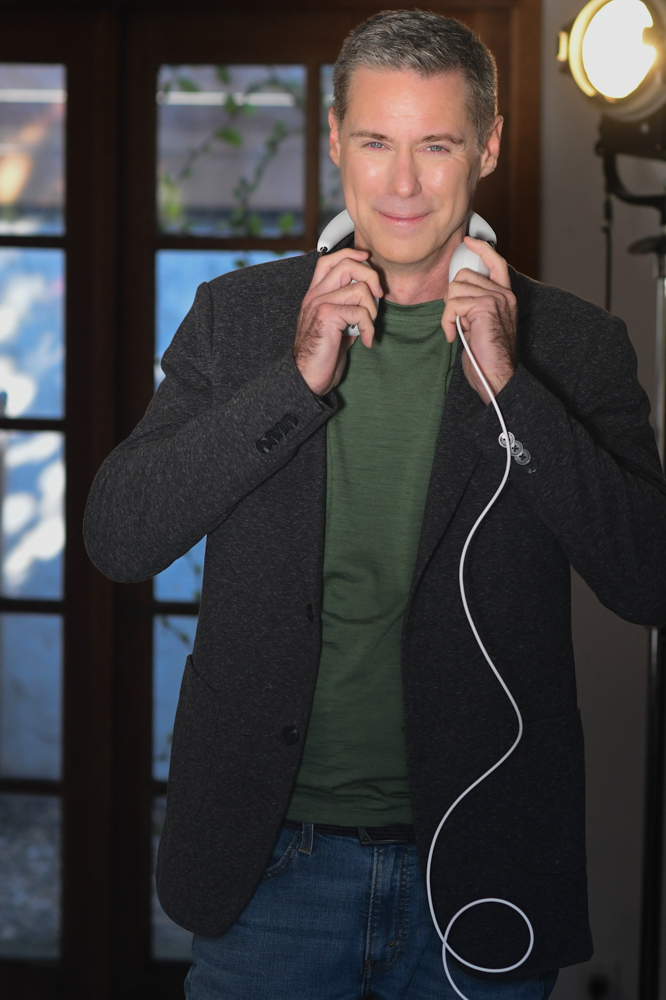
Roy Samuelson
AI voice generation and digital accessibility are two industries running into each other. Parity Endeavors works the seam.
I've advised, produced, and performed thousands of Audio Description credits for Netflix, Disney+, HBO, Hulu, and FX. When the audience is blind, there's no safety net. No body language, no visual context to rescue a tone that's slightly off. The voice carries the whole meaning or it doesn't. Twenty years of that, under deadline, in single passes, teaches you to hear where delivery breaks from intent before anyone in the room has named it.
I've also gotten it wrong. I brought my own assumptions into the conversations and didn't ask about the assumptions on the other side. Most of what I know about hearing the difference started when we named those assumptions and got to where we actually wanted to go.
Blind professionals have been in the work itself since the start, not consulted after it.
I hold a patent portfolio related to Audio Description, received the 2021 Audio Description Achievement Award and an Earphones Award for audiobook narration, and have collaborated with the Television Academy and Actor (previously SAG) Awards to advance inclusion for accessibility professionals.
Consumer Technology Association (CTA)
- Contributor, CTA Industry Forecast (2026 and 2027 editions)
- Presenter, CTA Foundation (2026)
- Presenter, CTA Content and Entertainment Council (March 2026)
- Presenter, CTA Gaming Working Group (September 2026)
With the American Foundation for the Blind, I worked on Possibilities, the documentary that premiered at Carnegie Hall in June 2026. Its Audio Description opened with the Kevin's Way Tone, credited in the playbill.
I started Parity Endeavors because the same problem kept showing up: teams making voice and accessibility decisions with no reliable way to know whether the choice landed.
If Your Team Is Making a Voice Decision This Quarter,
Thirty Minutes Is Enough to Find Where It Breaks.
No commitment. We work out the right entry point and go from there.
Not ready to talk? The one-page brief covers the three places voice coherence breaks down and what to do about each.
For Audio Description performing, consulting, speaking, voice acting, and more, visit RoySamuelson.com